

Blown-In Insulation Centennial, CO
Expert blown in Insulation services for Centennial homeowners — free estimates, Xcel-rebate eligible
- Powered by Wisetack
- No Hard Credit Check to Apply
- Decisions in Seconds
Servicing Centennial, Loveland, Boulder, Longmont & more.
1 Day
99.97%
4.9★
$1,250+
- BPI Certified
- Xcel Energy Partner
- Licensed & Insured
- 4.9 Stars · 150+ Reviews
- Locally Owned
- CO Lic #325117
- BPI Certified
- Xcel Energy Partner
- Licensed & Insured
- 4.9 Stars · 150+ Reviews
- Locally Owned
- CO Lic #325117
Centennial Blown in Insulation | Level Up Insulation Co.
Centennial's most popular insulation upgrade — installed to Xcel Energy rebate standards, completed in one day.
Centennial homes built in the 1960s and 1970s often conceal knob-and-tube wiring behind plaster walls and beneath attic joists — and insulating around it incorrectly creates a fire hazard. Standard blown-in insulation installed without proper clearances can trap heat against aging conductors, turning an energy upgrade into a safety liability. At 5,761 ft elevation on the Colorado Front Range, IECC Climate Zone 5 demands a minimum of R-49 in the attic to manage the sustained heating degree days that drive winter energy costs. Dense-pack installation techniques and careful attic bypass sealing let you insulate these older homes without compromising wiring safety.
Level Up Insulation Co. provides blown-in insulation services across Centennial, CO and greater Arapahoe County. Whether your home needs cellulose insulation dense-packed into walls with knob-and-tube or fiberglass loose-fill topped off in the attic, our crews assess wiring conditions before any pneumatic blowing machine runs.
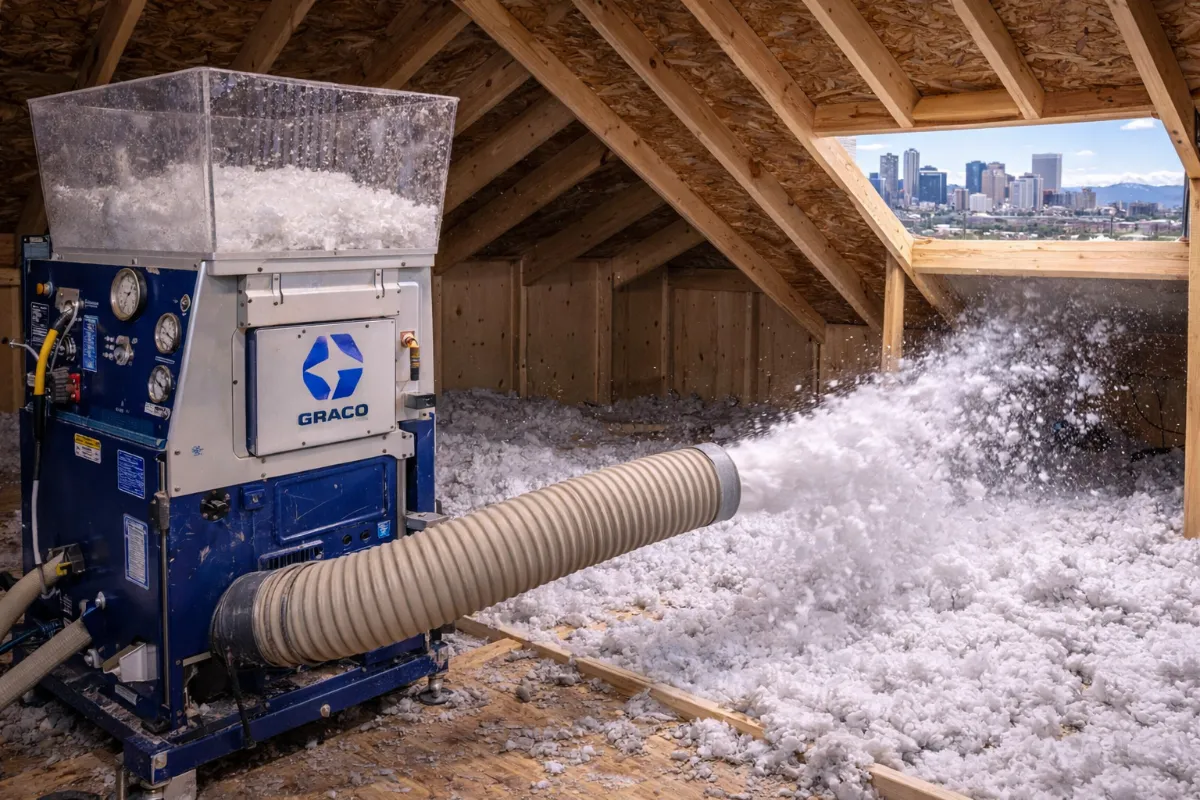
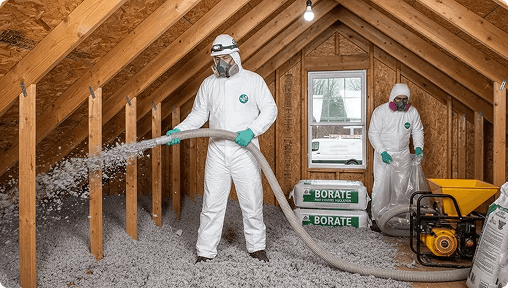
Why Centennial Homes Need Blown in Insulation
Centennial, CO sits at 5,761 feet on the Colorado Front Range, where heating degree days push HVAC systems hard from October through April. But elevation alone doesn’t define the insulation challenge here. A notable segment of Centennial’s housing stock in Arapahoe County includes mid-century and older homes that still contain knob-and-tube wiring in attic cavities and exterior walls. Standard batt insulation cannot be installed over knob-and-tube wiring without creating a fire hazard — the wiring relies on open-air clearance to dissipate heat. Blown-in insulation, specifically cellulose insulation applied via dense-pack installation techniques, provides the R-value performance these homes need while maintaining safe clearances around active conductors. Dense-pack cellulose achieves roughly R-3.5 per inch and, when installed correctly with a pneumatic blowing machine, fills around wiring without compressing against it the way friction-fit batts would.
This matters because homes with knob-and-tube wiring are often the same homes with the worst thermal envelope performance — original insulation that has long since settled, top-plate air leakage that was never addressed, and attic insulation depths well below the R-49 to R-60 range required by IECC Climate Zone 5. Blown-in insulation solves multiple problems simultaneously: it restores lost R-value from settled insulation, conforms to irregular framing cavities, and can be paired with attic bypass sealing to eliminate the air leakage pathways that account for up to 30% of a home’s heat loss. For Centennial homeowners with older wiring, this isn’t an optional upgrade — it’s the only code-safe path to meaningful energy efficiency gains.
Level Up Insulation Co. evaluates every Centennial attic for wiring type, existing insulation depth, and ventilation clearance at soffit ventilation channels before specifying material or depth. If your home has knob-and-tube wiring, fiberglass loose-fill may be recommended over cellulose in specific zones where moisture risk is elevated. Either way, the goal is the same: bring your home’s thermal performance in line with modern standards without compromising safety.
Blown-In Insulation Options for Centennial Homes
- Attic Loose-Fill to R-49 or R-60 — Cellulose insulation or fiberglass loose-fill applied with a pneumatic blowing machine over bare joists or existing.
- Dense-Pack Wall Cavity Fill — Cellulose dense-packed into enclosed 2×4 or 2×6 wall cavities through small access ports.
- Knob-and-Tube Compatible Installation — Dense-pack cellulose or open-cell approaches installed with verified clearances around legacy wiring.
- Soffit-to-Ridge Attic Prep — Installation of proper soffit ventilation baffles before blowing material.
Fiberglass Blown-In Insulation
- R-2.2 per inch
- Does not absorb moisture
- Lighter weight — good for older Centennial homes
- Long lifespan with minimal settling
- Standard option for Centennial new construction
- Xcel Energy rebate eligible
Cellulose Blown-In — Recommended for Centennial
- R-3.2–3.8 per inch (higher than fiberglass)
- Made from 85% recycled content
- Excellent air infiltration resistance for Centennial winds
- Fills irregular spaces more completely than fiberglass
- Natural fit for Centennial's low-humidity climate
- Xcel Energy rebate eligible
Where Level Up Installs Blown-In Insulation in Centennial
We’ve partnered with Wisetack to offer financing that customers actually love.
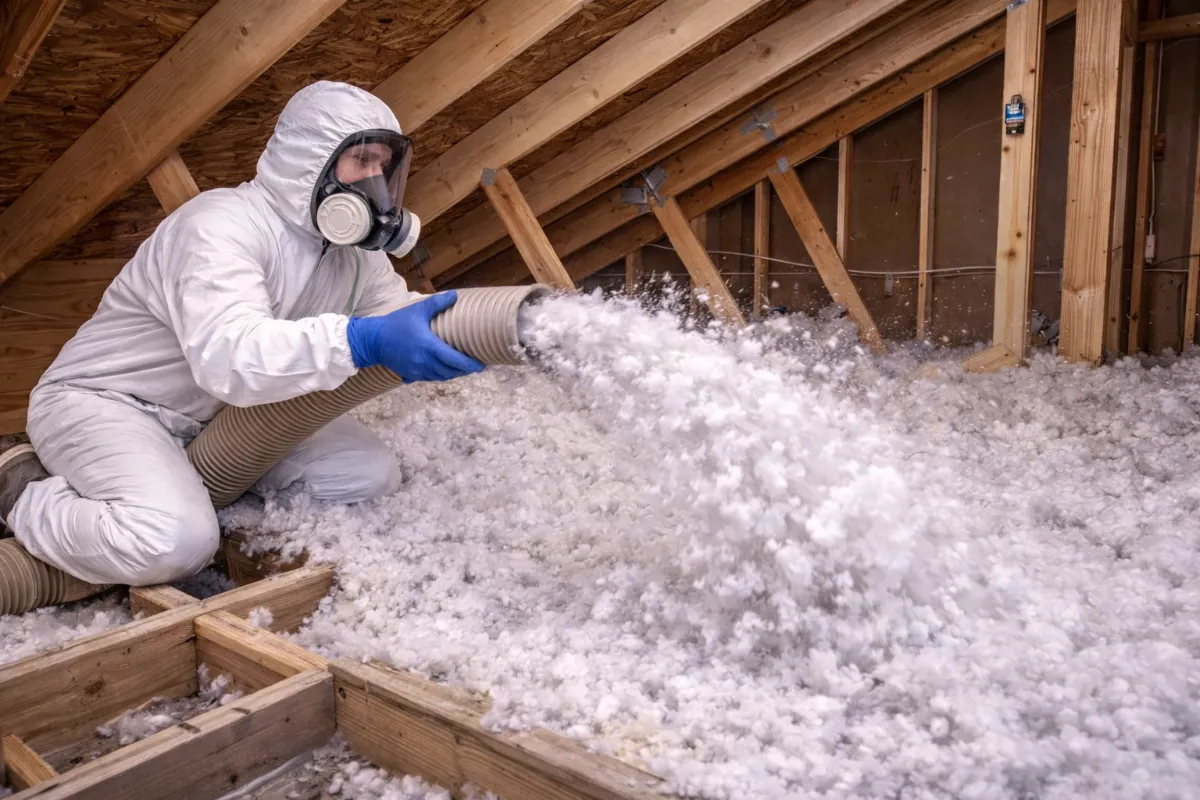
Centennial, CO homes built between the 1960s and 1990s frequently contain knob-and-tube wiring in attic spaces — a condition that eliminates standard batt insulation as a safe upgrade path. Blown-in insulation installed with a pneumatic blowing machine solves this problem directly.
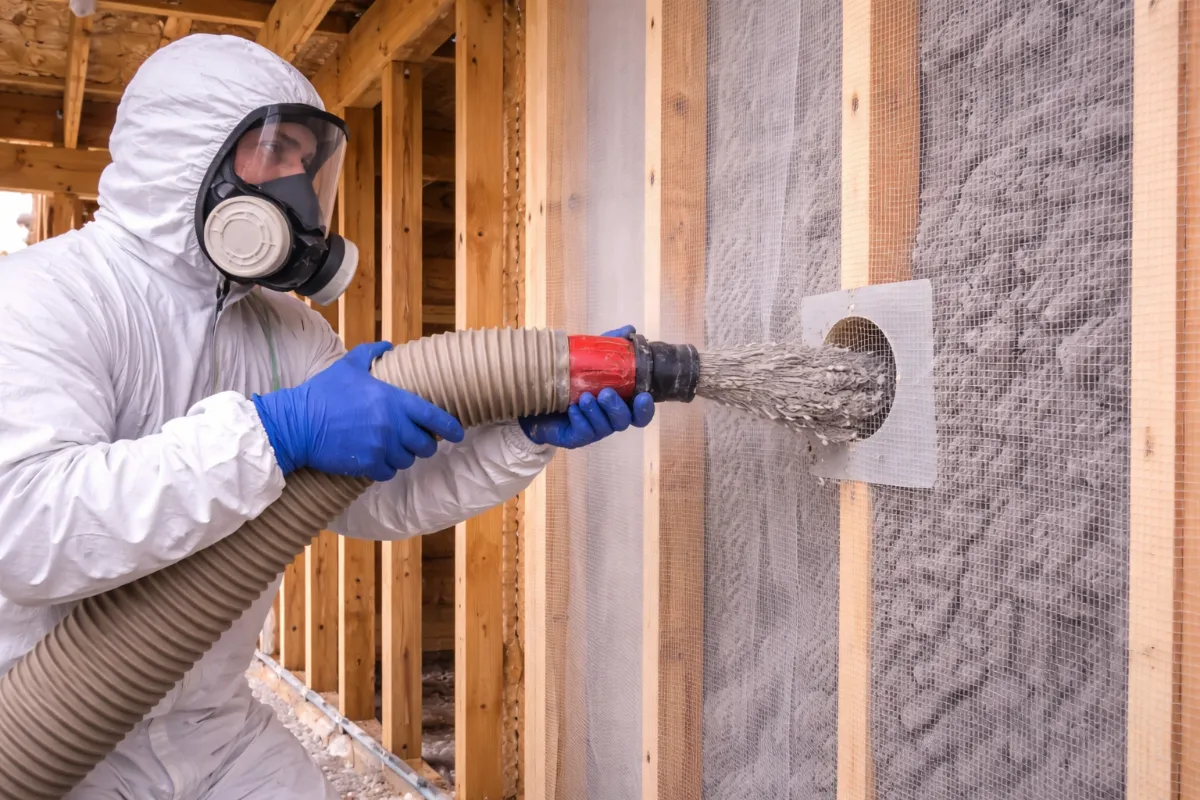
Level Up Insulation Co. follows a four-step process for every blown-in insulation project in Centennial, CO.
The business case for blown-in insulation in Centennial, CO starts with the Xcel Energy rebate program. As an Xcel Energy Trade Partner, Level Up Insulation Co.
Most Centennial Blown-In Insulation completed in one day
Blown-In Insulation Installation Process in Centennial
step 1
Free Insulation Assessment
step 2
Xcel Energy Pre-Approval
step 3
Air Sealing
step 4
Depth Gauge Installation
step 5
Machine Installation
step 6
Depth Verification
step 7
Full Cleanup
step 8
Rebate Submission
Cost in Centennial, CO
Blown-In Insulation Cost in Centennial, CO
Trusted Products & Partners


Centennial's climate demands more from your insulation. Make sure it's up to the job.
Frequently Asked Questions
Centennial sits at 5,761 ft elevation in IECC Climate Zone 5, where high heating degree days and intense summer solar gain create year-round insulation demand. Blown-in insulation — whether cellulose insulation or fiberglass loose-fill — conforms to irregular joist cavities, wiring, and obstructions that are common in Centennial’s mix of housing eras. Many older homes in Arapahoe County still have knob-and-tube wiring, which requires dense-pack installation techniques that maintain safe clearances around conductors. This makes loose-fill insulation the safest, most effective upgrade path for reaching the R-49 to R-60 range recommended for this climate. Learn more about our full approach on our Centennial attic insulation page.
Project cost for blown-in insulation in Centennial typically ranges from $1.50 to $3.50 per square foot, depending on material choice, existing R-value, and accessibility. Attics that need attic bypass sealing or have knob-and-tube wiring requiring specialized dense-pack methods will fall toward the higher end. The good news: Xcel Energy rebate programs currently offer incentives to Centennial homeowners who upgrade insulation to qualifying levels, which can offset 15–30% of your total project cost. Level Up Insulation Co. handles rebate paperwork so you capture every dollar available. We provide a detailed cost breakdown during your free in-home assessment.
Our process starts with a thorough inspection of your attic’s thermal envelope, checking for top-plate air leakage, settled insulation, and wiring conditions — especially knob-and-tube configurations that require safe clearance protocols. Before any material is blown, we perform air sealing at every attic bypass, plumbing penetration, and electrical chase. Then our crew uses a pneumatic blowing machine to install cellulose insulation or fiberglass loose-fill to the target depth, while preserving proper soffit ventilation channels. Most Centennial attic projects are completed in a single day. See our full Centennial insulation services overview for additional details.
Three clear signals: uneven room temperatures between floors, energy bills that spike during Colorado Front Range winters, and visible insulation that sits below or level with your attic joists. Settled insulation is extremely common in Centennial homes built before 2000 — what started as R-30 may now perform closer to R-19, well below the IECC Climate Zone 5 minimum of R-49. Homes with knob-and-tube wiring often had insulation removed or were never properly insulated to begin with, creating severe thermal bridging. Schedule a free attic inspection with Level Up Insulation Co. and we’ll measure your current R-value and recommend the right blown-in solution.
Still have questions?
Call, text, or schedule a free inspection.
Centennial Blown-In Insulation
Xcel Energy Blown-In Insulation Rebates
ENERGY STAR Insulation Guide — Colorado
Cellulose Insulation Manufacturers Association
Technical resources on cellulose blown-in performance, sustainability, and installation standards.
All Communities We Serve
Blown-In Insulation Near Centennial
GET A ESTIMATE