

Blown-In Insulation Boulder, CO
Expert blown in Insulation services for Boulder homeowners — free estimates, Xcel-rebate eligible
- Powered by Wisetack
- No Hard Credit Check to Apply
- Decisions in Seconds
Servicing Boulder, Denver, Fort Collins, Longmont & more.
1 Day
99.97%
4.9★
$1,250+
- BPI Certified
- Xcel Energy Partner
- Licensed & Insured
- 4.9 Stars · 150+ Reviews
- Locally Owned
- CO Lic #325117
- BPI Certified
- Xcel Energy Partner
- Licensed & Insured
- 4.9 Stars · 150+ Reviews
- Locally Owned
- CO Lic #325117
Blown-In Insulation Boulder, CO | Level Up Insulation
Boulder's most popular insulation upgrade — installed to Xcel Energy rebate standards, completed in one day.
Boulder homes built before 1990 — which account for roughly 60% of the city’s housing stock — often have wall cavities filled with nothing but stagnant air. At 5,430 ft elevation on the Front Range, that dead space becomes a thermal liability, bleeding conditioned air through uninsulated framing every month of the year. The dense-pack technique solves this without demolition: small holes drilled through exterior siding allow pneumatic installation of cellulose insulation directly into closed wall cavities, then patched to near-invisible. No torn-out drywall, no multi-day disruption.
Whether your Boulder home needs wall cavity insulation or an attic blown-in top-off to reach the IECC Climate Zone 5 minimum of R-49, Level Up Insulation Co. delivers measurable thermal performance gains backed by depth ruler verification and post-install documentation. We handle the Xcel Energy rebate paperwork so you capture every available incentive.
Why Boulder Homes Need Blown in Insulation
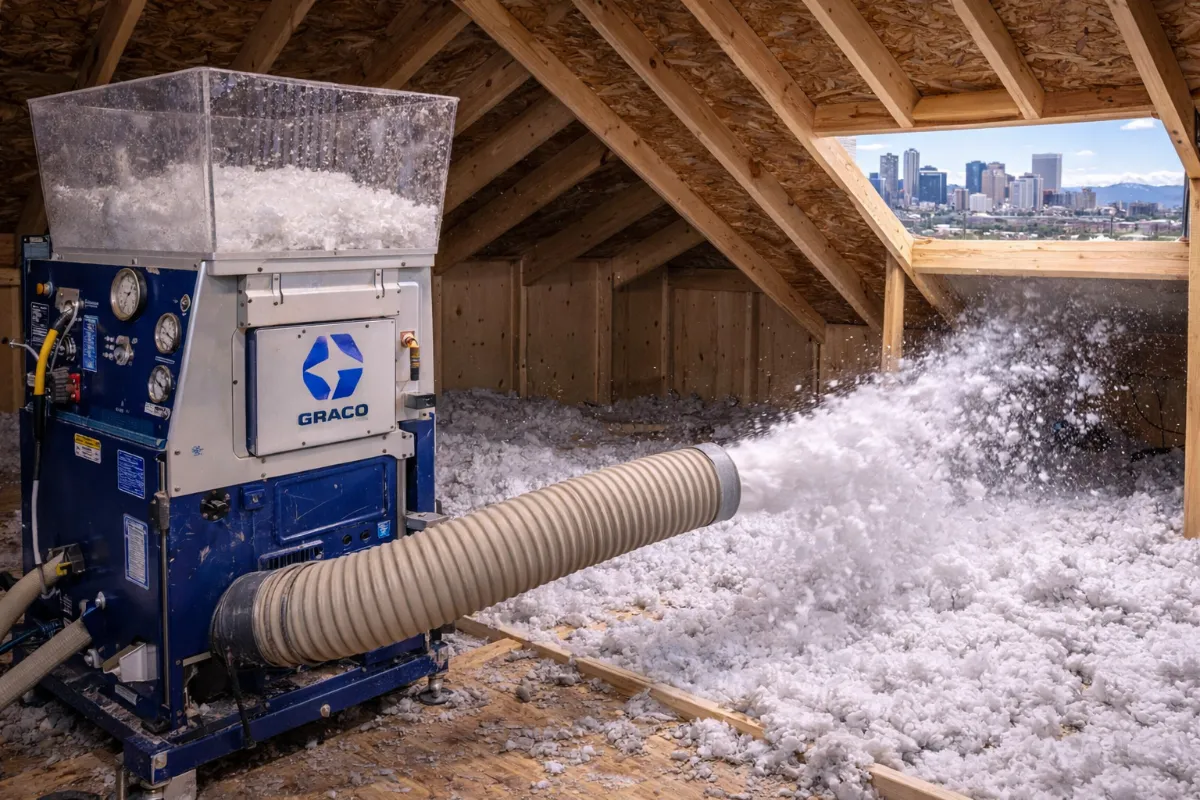
Boulder sits at 5,430 ft elevation on the Colorado Front Range, where heating degree days accumulate fast from October through April and afternoon summer sun drives attic temperatures well above 130°F. That combination creates year-round insulation demand — and most Boulder homes built before 2000 don’t meet the current IECC Climate Zone 5 requirement of R-49 minimum in the attic. Settled insulation is the norm, not the exception. Original fiberglass batts compress over decades, and cellulose installed in the 1980s loses 10–20% of its effective R-value as it compacts. A blown-in top-off or full replacement restores thermal performance without tearing into finished surfaces.
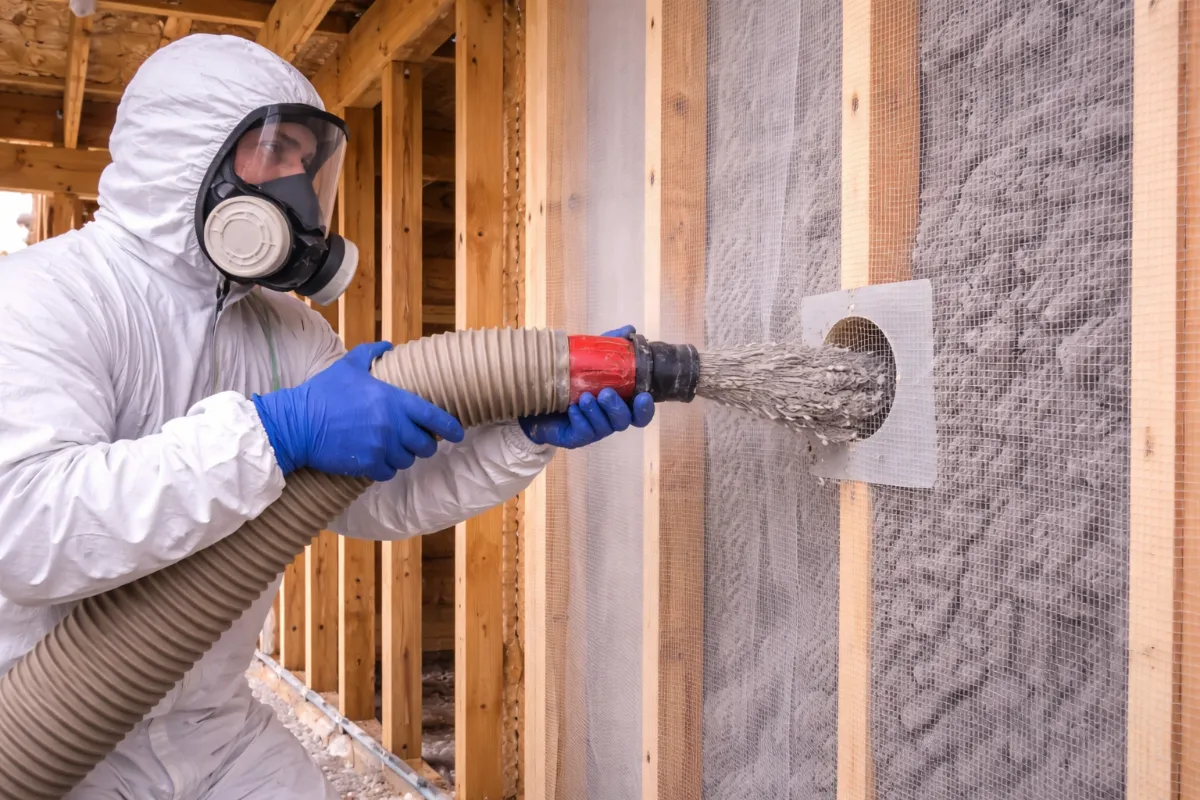
What makes Boulder’s housing stock particularly well-suited for blown-in insulation is the prevalence of finished walls with empty or under-insulated cavities. Homes from the 1950s through the 1980s were often framed with 2×4 walls and insulated — if at all — with thin batts that leave gaps and thermal bridging at every stud. Dense-pack cellulose insulation installed through small drilled holes fills those wall cavities completely, eliminating air pockets and reducing convective heat loss by up to 40%. The process requires no drywall removal and no disruption to your interior finishes. Level Up Insulation Co. uses pneumatic installation equipment calibrated to achieve 3.5 lb/ft³ density in wall cavities, which is the threshold where cellulose stops settling and starts performing as both insulation and an air barrier.
Boulder homeowners also benefit from Xcel Energy rebate programs that offset a significant portion of blown-in insulation project costs. When your home’s attic and wall cavities are properly insulated and air sealed, heating bills drop measurably — and the rebate accelerates your payback timeline to as little as 2–3 years depending on your home’s square footage and existing conditions.
Blown-In Insulation Options for Boulder Homes
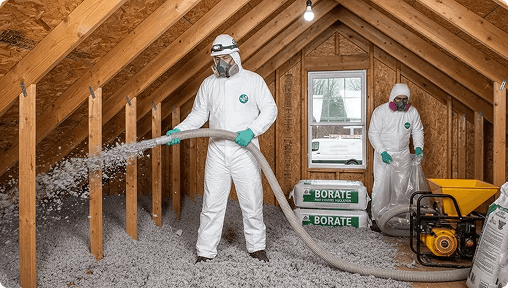
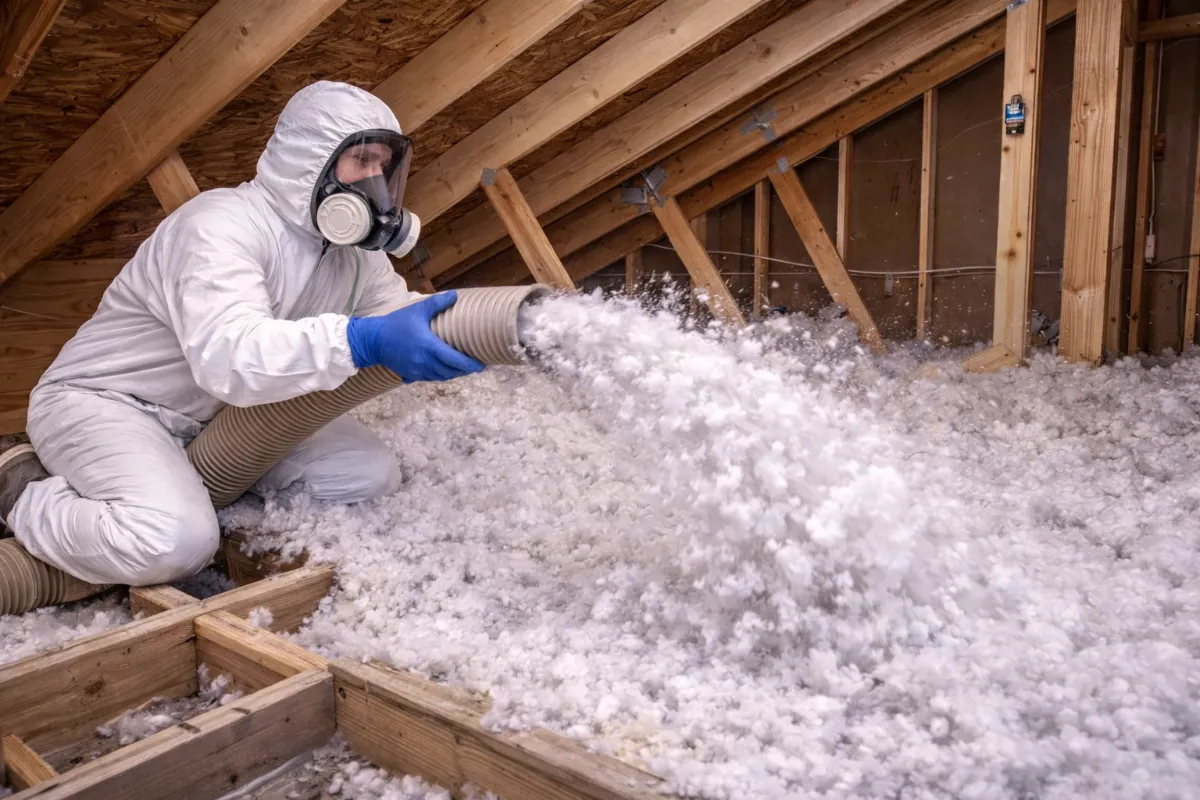
- Attic Blown-In to R-49 — Pneumatic installation of cellulose insulation or fiberglass insulation over bare joists or minimal existing layers.
- Blown-In Top-Off — A top-off installation that restores R-value in attics where settled insulation has dropped 30–40% below its.
- Dense-Pack Wall Cavity Retrofit — The dense-pack technique fills enclosed wall cavities through small drilled holes without removing drywall or siding.
- Air Sealing + Attic Insulation Combo — Targeted air sealing of attic bypasses, top plates, and penetrations before blowing insulation.
Fiberglass Blown-In Insulation
- R-2.2 per inch
- Does not absorb moisture
- Lighter weight — good for older Boulder homes
- Long lifespan with minimal settling
- Standard option for Boulder new construction
- Xcel Energy rebate eligible
Cellulose Blown-In — Recommended for Boulder
- R-3.2–3.8 per inch (higher than fiberglass)
- Made from 85% recycled content
- Excellent air infiltration resistance for Boulder winds
- Fills irregular spaces more completely than fiberglass
- Natural fit for Boulder's low-humidity climate
- Xcel Energy rebate eligible
Where Level Up Installs Blown-In Insulation in Boulder
We’ve partnered with Wisetack to offer financing that customers actually love.
Boulder’s housing stock includes thousands of homes built between the 1950s and 1980s with finished walls that hold little or no cavity insulation. At 5,430 ft elevation on the Front Range, these homes face heating seasons that demand continuous thermal performance — yet upgrading wall insulation has historically meant tearing out drywall.
Level Up Insulation Co. follows a four-step process for every blown-in insulation project in Boulder, CO.
The business case for blown-in insulation in Boulder, CO starts with the Xcel Energy rebate program. As an Xcel Energy Trade Partner, Level Up Insulation Co.
Most Boulder Blown-In Insulation completed in one day
Blown-In Insulation Installation Process in Boulder
step 1
Free Insulation Assessment
step 2
Xcel Energy Pre-Approval
step 3
Air Sealing
step 4
Depth Gauge Installation
step 5
Machine Installation
step 6
Depth Verification
step 7
Full Cleanup
step 8
Rebate Submission
Cost in Boulder, CO
Blown-In Insulation Cost in Boulder, CO
Trusted Products & Partners


Boulder's climate demands more from your insulation. Make sure it's up to the job.
Frequently Asked Questions
Boulder sits at 5,430 ft elevation in IECC Climate Zone 5, where heating demand is intense from October through April and summer afternoon temperatures can swing 40°F in a single day. Blown-in insulation — whether cellulose insulation with 80%+ recycled content or fiberglass insulation — conforms to every joist, rafter, and irregular framing cavity, eliminating the gaps that batt products leave behind. Most Boulder homes built before 1990 have settled insulation in the attic and zero insulation in exterior wall cavities. A blown-in attic upgrade to R-49 plus dense-pack wall cavity insulation addresses both problems in a single project, cutting heat loss where Front Range homes lose it most.
Pricing depends on square footage, material choice, current R-value, and accessibility. Attic blown-in top-off installations are typically the most cost-effective upgrade per R-value gained, while dense-pack wall cavity retrofits cost more due to the precision drilling and pneumatic installation required. The good news: Xcel Energy rebate programs currently offer Boulder homeowners cash-back incentives for qualifying insulation upgrades, which can offset a meaningful portion of the project cost. Level Up Insulation Co. handles the rebate paperwork so you capture every dollar available. Contact us for a free estimate with exact pricing for your home.
Level Up Insulation Co. starts every Boulder project with a thorough inspection — measuring existing R-value, identifying attic bypasses, and flagging areas where air sealing is needed before any insulation goes in. For attics, loose-fill insulation is fed through a pneumatic installation hose and distributed evenly across the attic floor, verified with depth ruler verification to confirm R-49 minimum coverage. For wall cavities, our crew uses the dense-pack technique: small holes are drilled into the exterior or interior wall surface, cellulose insulation is blown to 3.5+ lb/ft³ density, and the holes are patched. The result is a fully insulated wall without opening finished surfaces — minimal disruption to your daily life.
The clearest signs are uneven room temperatures, high Xcel Energy heating bills relative to your square footage, and visible settled insulation when you look into your attic — if you can see the tops of ceiling joists, you’re well below the R-49 minimum required by IECC Climate Zone 5 standards. Ice dams along your roofline after Front Range snowstorms point to heat escaping through an under-insulated attic. Cold exterior walls in winter almost always mean empty wall cavities, a problem dense-pack blown-in insulation solves without a remodel. Schedule a free inspection with Level Up Insulation Co. and we’ll measure exactly where your home is losing energy.
Still have questions?
Call, text, or schedule a free inspection.
Boulder Blown-In Insulation
Xcel Energy Blown-In Insulation Rebates
ENERGY STAR Insulation Guide — Colorado
Cellulose Insulation Manufacturers Association
Technical resources on cellulose blown-in performance, sustainability, and installation standards.
All Communities We Serve
Blown-In Insulation Near Boulder
GET A ESTIMATE