

Blown-In Insulation in Aurora, CO
Best Cost-Per-R-Value for Aurora Attics
- Powered by Wisetack
- No Hard Credit Check to Apply
- Decisions in Seconds
Servicing Denver, Boulder, Colorado Springs, Fort Collins & more.
1 Day
99.97%
4.9★
$1,250+
- BPI Certified
- Xcel Energy Partner
- Licensed & Insured
- 4.9 Stars · 150+ Reviews
- Locally Owned
- CO Lic #325117
- BPI Certified
- Xcel Energy Partner
- Licensed & Insured
- 4.9 Stars · 150+ Reviews
- Locally Owned
- CO Lic #325117
Blown-In Insulation in Aurora, CO | Level Up Insulation
Best Cost-Per-R-Value for Aurora Attics
The Air Sealing Requirement: Why Every Blown-In Project Includes It
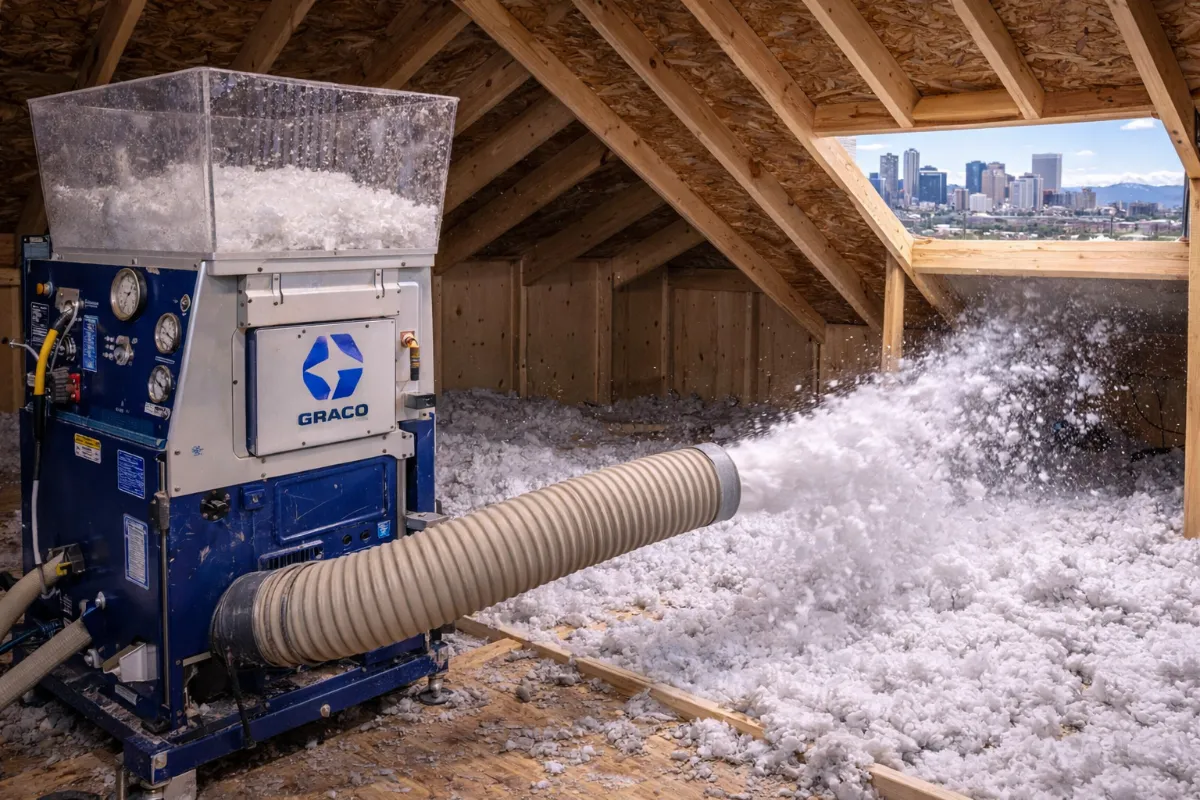
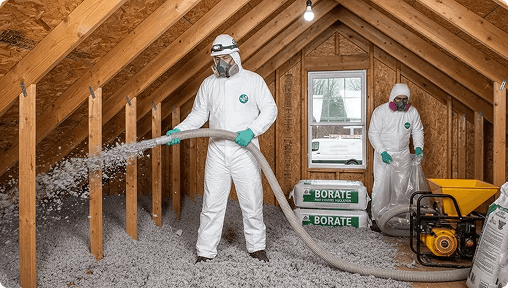
Level Up includes comprehensive attic air sealing as a mandatory first step on every blown-in project. This means we enter the attic, push aside existing insulation, seal every bypass we find, insulate the attic hatch, and only then add the new blown-in material. Contractors who skip this step are providing a service that will underperform for the life of the installation. For the full air sealing process, see our step-by-step attic air sealing guide.
Blown-In Cellulose vs. Blown-In Fiberglass
Blown-In Cellulose
- R-value per inch: R-3.2
- Depth to R-49: ~15 inches
- Material: Recycled newsprint, fire-treated
- Air resistance: Excellent — resists air movement better
- Moisture sensitivity: More sensitive — keep dry
- Cost: Lower
- Best for Aurora: Primary recommendation for attic floors
Blown-In Fiberglass
- R-value per inch: R-2.2
- Depth to R-49: ~22 inches
- Material: Sand/glass fibers, recycled content
- Air resistance: Good
- Moisture sensitivity: Moisture-tolerant
- Cost: Slightly higher per R-value unit
- Best for Aurora: Top-off over existing fiberglass; humid environments
Blown-In Insulation for Aurora's Most Common Home Types
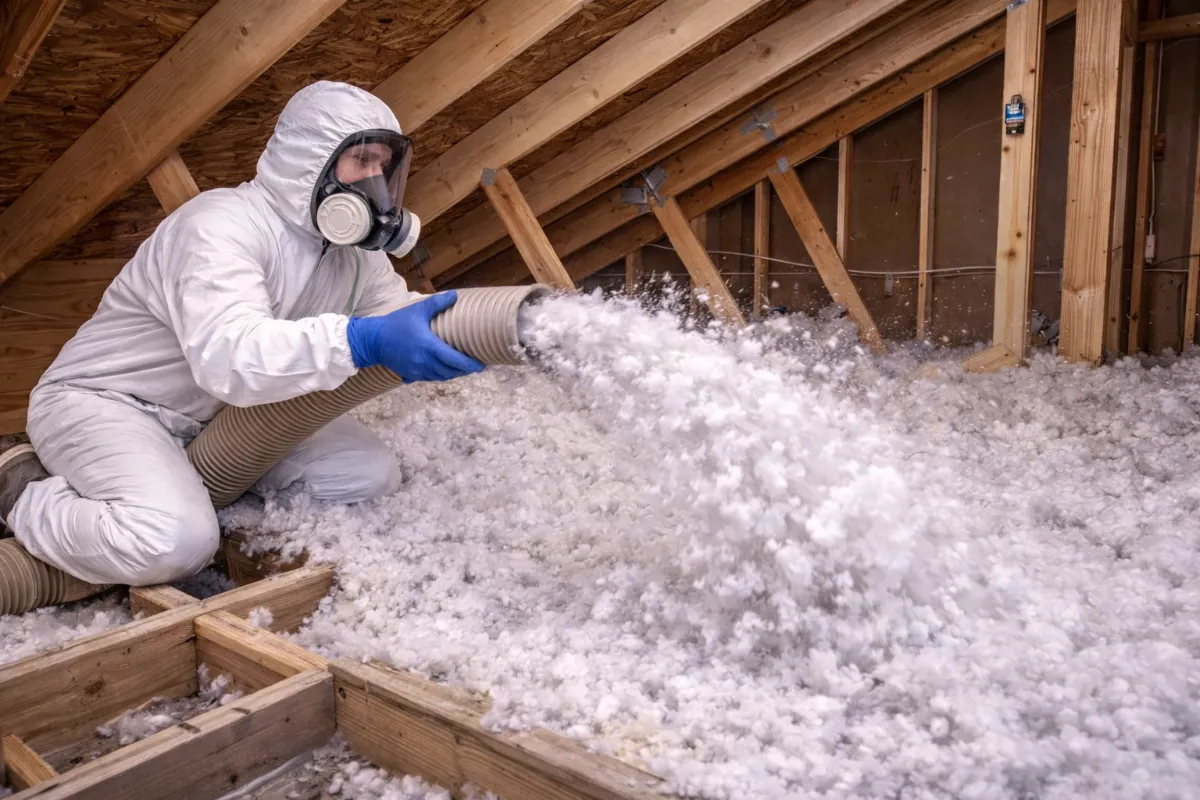
1960s–1980s Ranch Homes (Hoffman Heights, Village East, Aurora Hills)
1980s–1990s Two-Stories (Heather Ridge, Heather Gardens, Meadow Hills)
1995–2010 Production Homes (Saddle Rock, Eagle Bend, Sterling Hills)
Walls in Major Renovations
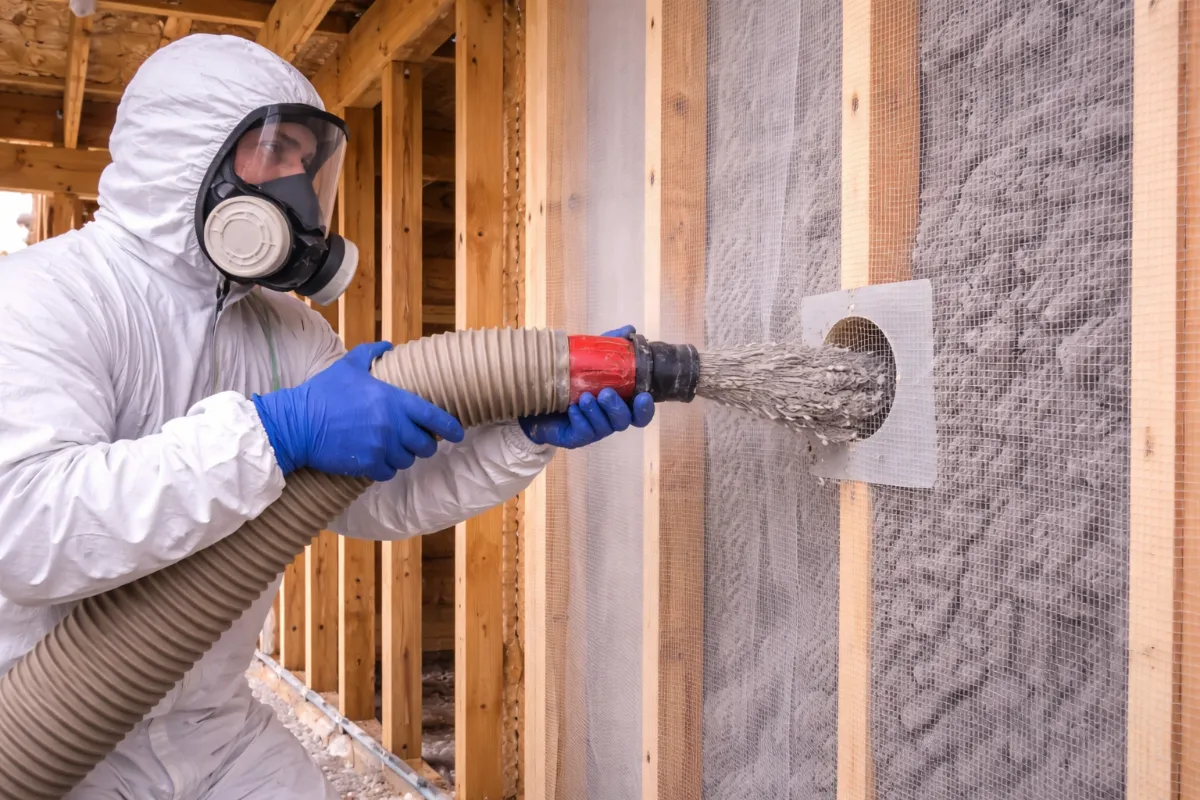
When wall cavities are opened for renovation in Aurora homes, dense-pack blown-in cellulose in wall cavities is a more effective option than standard batts, filling every void and providing better air resistance. This is particularly worth considering in older Aurora homes where original wall insulation may be absent entirely. For wall cavity insulation decisions, see our batt insulation in Aurora guide for the full picture.
Most Aurora Blown-In Insulation completed in one day
Blown-In vs. Spray Foam: When to Choose Which in Aurora
Attic floors needing R-49 coverage
Crawl space floor joists and rim joists
Closed-cell spray foam — moisture control and air sealing demands require it
Roof deck / conditioned attic
Interior wall sound attenuation
New construction wall cavities
Either dense-pack blown-in or fiberglass batts depending on budget and specs
Blown-In Insulation Cost in Aurora, CO
For full Colorado pricing details by application type, see our spray foam and insulation cost guide. For all available rebate programs, see our Colorado insulation rebates guide.
Trusted Products & Partners


Aurora's climate demands more from your insulation. Make sure it's up to the job.
Frequently Asked Questions
To reach R-49 (Colorado’s current minimum recommendation), you need approximately 15 inches of blown-in cellulose or 22 inches of blown-in fiberglass. Level Up installs depth markers throughout the attic and documents final coverage to verify uniform R-49 installation.
Blown-in fiberglass settles approximately 10–20% over 15–20 years. Blown-in cellulose settles slightly more but provides denser coverage that resists settling better than fiberglass in dry climates like Aurora’s. Level Up installs to target depth accounting for expected settling so the final settled R-value still meets your target.
Yes, in most cases. If existing batts are dry, uncontaminated, and intact in position, adding blown-in perpendicular to them is standard practice and more effective than adding more batts. If batts are wet, contaminated, or fallen, they should be removed first. See our insulation removal guide for Aurora for that scenario.
Most Aurora blown-in insulation projects — air sealing plus blown-in to R-49 — are completed in 4–7 hours by a Level Up crew. You can return to normal use of all living areas immediately after. No evacuation required, unlike spray foam applications.
Still have questions?
Call, text, or schedule a free inspection.
All Communities We Serve
Blown-In Insulation Near Denver
GET A ESTIMATE